

Jürgen Lingl
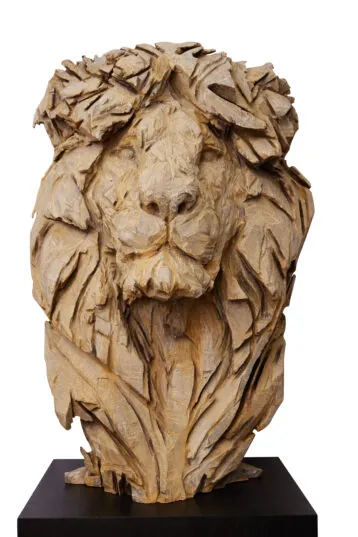
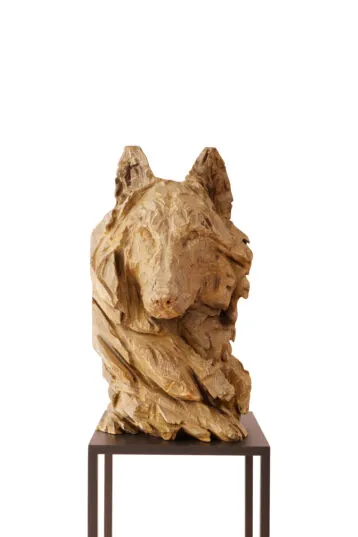
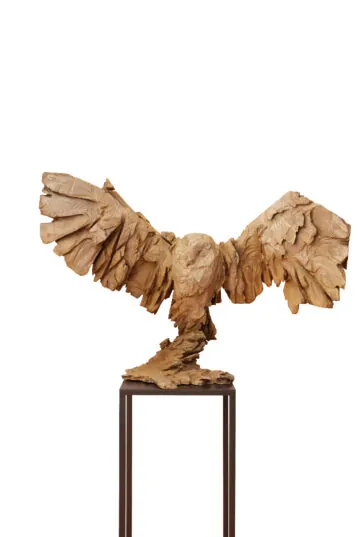
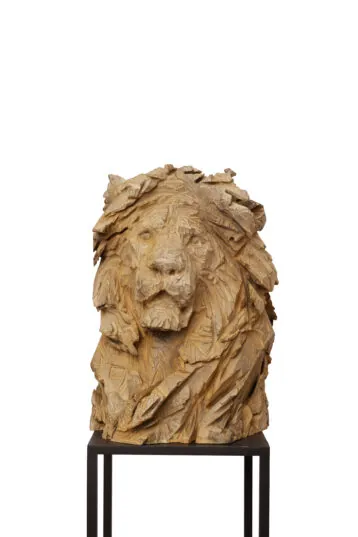
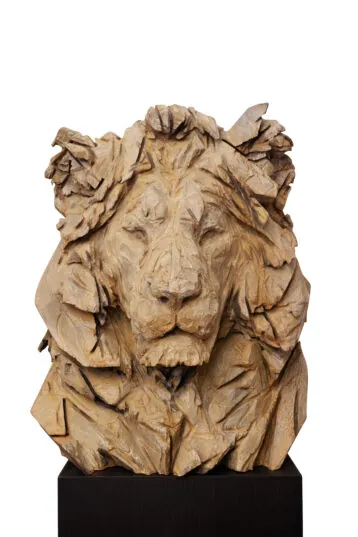
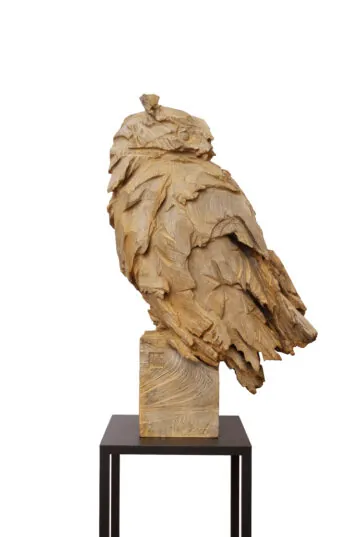
Jürgen Lingl (Bad Tölz, Bavaria, 1971) is an artist in whom craft, expression and freedom come together in a special way. From an early age, his fascination with form and imagination revealed itself. What began with drawing and painting animals, people, architecture and landscapes grew into a deep-rooted artistic vocation. After graduating from the Josef-Effner-Gymnasium in Dachau, Lingl first presented his work in a gallery at the age of 20, where he showed studies of the human body in a variety of techniques. Following this, he trained as a woodcarver with master Hans-Joachim Seitfudem. His exceptional talent did not go unnoticed: his graduation work was awarded first prize in Munich and Bavaria, as well as second prize at the national level.
In 1996, Lingl settled in Switzerland as an independent artist. There he began to devote himself to a working method that characterizes his oeuvre to this day: creating sculptures with the chainsaw. What appears to others as a crude instrument becomes in his hands a refined extension of his artistic language. His thorough classical training gives him both the technical mastery and the freedom to move seemingly effortlessly between diverse themes, from religious figures and monumental works to sensual nudes and powerful animal figures.
Since 1999, Jürgen Lingl has lived and worked in France. A highly individual signature manifests itself in his sculptures: energetic, direct and intensely vivid. His sculptures seem not so much hewn as drawn in space, as if the chainsaw has become a pencil and wood allows itself to be transformed into a three-dimensional sketch full of rhythm, tension and emotion. The addition of color and pencil accents enhances the impressionistic nature of his work and gives the surfaces a striking vitality.
His sculptures display a rare combination of technical mastery and artistic inspiration, inviting the viewer to experience the strength, fragility and movement of form in an intense way.
The sculptures are initially created from wood, some works are then made into a mold so that they can also be cast in bronze.